Exposure '08 and Some Very Cool Ceramics
Leeuwarden, Netherlands
 Exposure is an annual student showcase sponsored by the Northern College of Leeuwarden (which is pronounced "LAY-var-den," approximately). This school has one of the most interesting game programs I've ever heard of. All the assignments are actually work projects with real game development studios. The companies approach the school looking for student labor; the school
  helps to match them up appropriately; and the students learn on the job. It isn't always full-time work, because the students also take classes in the usual way. Exposure is the great matchmaking event of the year, where the students show off projects of their own, and employers wander around and look at the exhibits. They also have a number of invited guest speakers, and I was asked to give a lecture by Tim Laning of Grendel Games, who's also a part-time instructor at the college. I also had some very interesting talks with Albert Sikkema, who heads up the program. We're trying to see if there's a way I can be more involved.
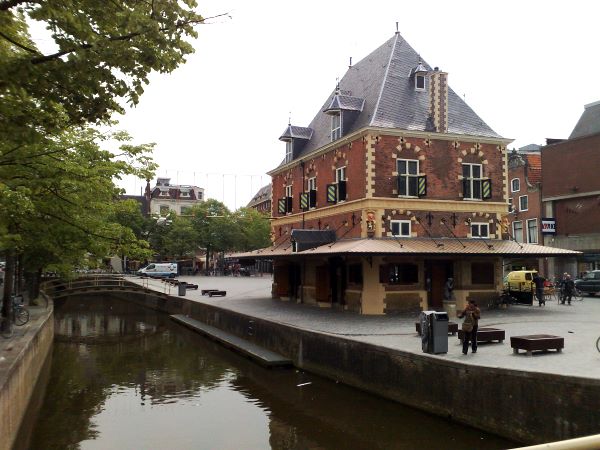
Leeuwarden is an ancient and extremely pretty town in Friesland, the northernmost province of Holland. Like many Dutch cities, it's full of canals that once brought trade from all over the world. I snapped a picture of the original weighing-house, at which merchants had to stop and prove that they were providing honest measure before they could take their goods farther on up the canal to the market.
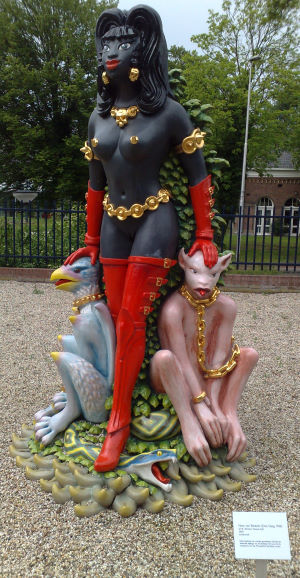
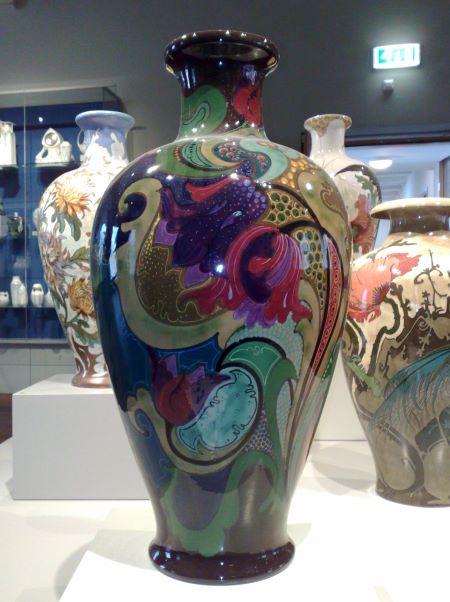 I had some time on my hands after my talk, so Tim dropped me off at the Princessehof Ceramics Museum, whose building, as luck would have it, is also the birthplace of the artist M.C. Escher, beloved of programmers, mathematicians, and nerds generally. The museum has an extensive collection of works from Holland's history, as well as a number of other Islamic and Asian pieces, including some Ming dynasty vases from China. (Looking at them, I couldn't see what the big deal is about Ming vases, but I'm probably just a philistine, or perhaps the ones I saw aren't necessarily the best examples.) My favorite collection was the large group of Art Nouveau plates and vases, of which this is one example. But the museum isn't limited to historical works; it also contains a number of modern items such as this dramatic statue of Eve as a dominatrix, holding two male demon-figures in chains and crushing the serpent under her foot. (The full title is E.V.E. 1: Erotics Versus Evil. This is one of the things I like about Europe -- precious few American art museums would dare have something like this in their garden.)
 I also like these geometric works by the artist Wim Borst, most of which don't have any pretensions to functionality.
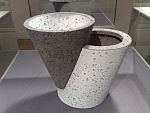
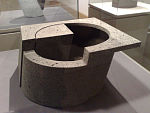
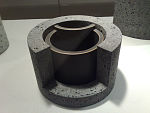
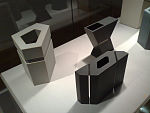
After my talk the organizers of Exposure gave me a present -- some tasty spiced cookies rather reminiscent of Italian biscotti, and a bottle of something called Meekma -- a 60-proof liqueur which seems related to gin or the Dutch genever (from which gin derives). Both are characteristic of Friesland, apparently. I'm looking forward to my next visit.
Exposure is an annual student showcase sponsored by the Northern College of Leeuwarden (which is pronounced "LAY-var-den," approximately). This school has one of the most interesting game programs I've ever heard of. All the assignments are actually work projects with real game development studios. The companies approach the school looking for student labor; the school helps to match them up appropriately; and the students learn on the job. It isn't always full-time work, because the students also take classes in the usual way. Exposure is the great matchmaking event of the year, where the students show off projects of their own, and employers wander around and look at the exhibits. They also have a number of invited guest speakers, and I was asked to give a lecture by Tim Laning of Grendel Games, who's also a part-time instructor at the college. I also had some very interesting talks with Albert Sikkema, who heads up the program. We're trying to see if there's a way I can be more involved.Leeuwarden is an ancient and extremely pretty town in Friesland, the northernmost province of Holland. Like many Dutch cities, it's full of canals that once brought trade from all over the world. I snapped a picture of the original weighing-house, at which merchants had to stop and prove that they were providing honest measure before they could take their goods farther on up the canal to the market.
I had some time on my hands after my talk, so Tim dropped me off at the Princessehof Ceramics Museum, whose building, as luck would have it, is also the birthplace of the artist M.C. Escher, beloved of programmers, mathematicians, and nerds generally. The museum has an extensive collection of works from Holland's history, as well as a number of other Islamic and Asian pieces, including some Ming dynasty vases from China. (Looking at them, I couldn't see what the big deal is about Ming vases, but I'm probably just a philistine, or perhaps the ones I saw aren't necessarily the best examples.) My favorite collection was the large group of Art Nouveau plates and vases, of which this is one example. But the museum isn't limited to historical works; it also contains a number of modern items such as this dramatic statue of Eve as a dominatrix, holding two male demon-figures in chains and crushing the serpent under her foot. (The full title is E.V.E. 1: Erotics Versus Evil. This is one of the things I like about Europe -- precious few American art museums would dare have something like this in their garden.)I also like these geometric works by the artist Wim Borst, most of which don't have any pretensions to functionality.After my talk the organizers of Exposure gave me a present -- some tasty spiced cookies rather reminiscent of Italian biscotti, and a bottle of something called Meekma -- a 60-proof liqueur which seems related to gin or the Dutch genever (from which gin derives). Both are characteristic of Friesland, apparently. I'm looking forward to my next visit.

 Having completed my visit to RIT in Rochester, New York, I headed to Arlington, Virginia for three days of events at DeVry. I had been there before and enjoyed it a lot -- some of the best students I ever encountered. Although the events went well, the trip started badly when I got to my hotel and found that my booking had mysteriously disappeared. Someone, somewhere, had cancelled it and there were no other hotel rooms to be found in or near Arlington. I ran up a $140 cab fare driving around trying to find one. Even American Express Global Assist was unable to help me. They came to my rescue when I lost my wallet in Zurich, on the way to Santiago, Chile; but in this case they were distinctly disappointing. They found me one hotel room which turned out to be in Richmond, close to a hundred miles away, and when I called back to ask for something else, they found me another one in Arlington, Texas. After that I gave up and slept on the floor of Washington National Airport, as one place where I knew I could stay and be safe, and find transportation in the morning. It was a frustrating and thoroughly uncomfortable time, especially as the airport played loud music all night, presumably to discourage people like me from sleeping there.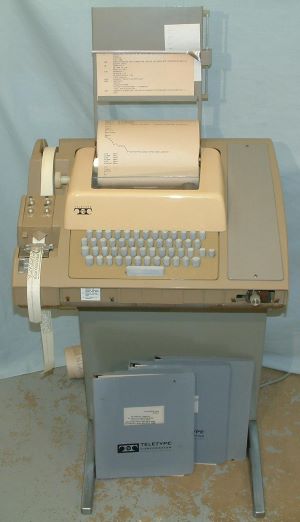
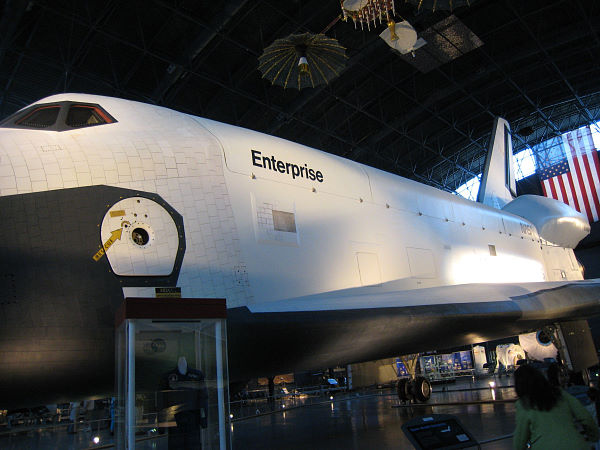
 I first met Andy Phelps at one of the early conferences at Algoma University College in Sault Ste. Marie, Ontario. He was a young professor at RIT in Rochester, New York, and later he was one of the first people to hire me to give a game design workshop -- to the faculty! Andy wanted to try to convey to the non-gamer professors at in the RIT Department of Information Technology just what this "interactive entertainment" thing was all about.
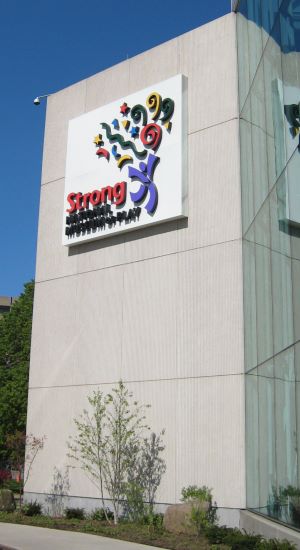 I had some time before my flight on Tuesday, so Andy suggested I have a look at the Strong National Museum of Play. Margaret Strong was an avid collector, amassing thousands and thousands of dolls, toys, and games. Her collection was the basis for the museum, which also houses the National Toy Hall of Fame. I thought I would only want to spend an hour or so there, but once I got inside I realized just how much there was to see. A lot of it really took me back to my childhood. There was also a lot of interesting social and historical commentary; the collection of toys on the theme of atomic power and nuclear war, reflecting the concerns of the Cold War, really caught my attention. It's one thing to see one or two of these objects, but to have them all together in one place is something else again. We were really fascinated by nuclear war; as a cultural trope it resonates much more strongly than anything I can identify today. Even global warming, which potentially represents a greater disaster than nuclear war, doesn't get turned into toys.